A good everyday-carry knife is the smallest lawful tool that reliably handles your real daily jobs. Prioritize a secure lock or deliberate non-locking design, controlled opening, a blade shape you can sharpen, safe pocket retention, and corrosion resistance suited to your environment. Check current state, local, workplace, school, venue, and travel rules before carrying it.
Match an EDC knife to the job
| Use pattern | Useful design | Why | Main caution |
|---|---|---|---|
| Packages, cord, and light utility | Compact drop-point folder | Controllable tip and useful belly | Avoid cutting toward the body |
| Frequent one-handed work | Accessible opener with secure lock | Efficient deployment and closure | Opening mechanisms may be regulated |
| Wet or coastal environment | Corrosion-resistant steel and open construction | Easier cleaning and rust control | Rinse and dry after salt exposure |
| Public-friendly occasional carry | Small two-hand-opening slipjoint | Simple, discreet, and lightweight | No lock; keep force away from the spine |
| Rescue preparedness | Purpose-built cutter with glass tool | Specialized emergency functions | Training matters more than features |
How to use this guide
List the tasks you actually perform for two weeks. Opening cartons calls for different geometry than cutting rope outdoors. Then set maximum closed length, weight, blade length, opening method, lock type, pocket orientation, steel, handle texture, sharpening plan, and budget. Treat “tactical” styling as appearance unless a feature has a defined, safe purpose.
Start with lawful, appropriate carry
Rules can vary between neighboring cities and may distinguish concealed and open carry, fixed and folding blades, automated opening, blade length, and restricted places. Private property, employers, schools, airports, courts, and events can impose stricter policies. Check current official sources for every place you intend to carry.
Even when lawful, choose a tool whose appearance and use are appropriate to the setting. A compact utility folder often attracts less concern than an oversized blade and is easier to control for routine cutting. Never display or use a knife to intimidate.
Blade shape and size
A drop point gives a strong, controllable tip and a belly for slicing. A sheepsfoot or wharncliffe offers a straight working edge and a less elevated tip, useful for packaging and controlled utility cuts. Tanto-style tips emphasize piercing strength but create extra transitions to sharpen.
More blade is not automatically more useful. A compact edge reduces pocket bulk and is sufficient for many daily tasks. Thick “hard-use” grinds can wedge in cardboard and food; thin edges slice better but should not be pried or twisted.
Locks and closing safety
Liner and frame locks are compact, but fingers may enter the blade path during closing. Crossbar-style locks can keep fingers farther away and work from either side, though springs and internal tracks need inspection. Lockbacks are familiar and secure when clean. Slipjoints rely on spring tension rather than a lock and require deliberate cutting direction.
No mechanism is infallible. Keep pivots and lock faces clean, confirm full engagement before use, and stop using a knife that develops unexpected vertical movement, lock slip, cracks, or loose hardware.
Opening and pocket carry
Thumb studs, holes, and flippers affect access and glove use. Assisted or automatic mechanisms may be restricted even when similar manual folders are allowed. A two-hand opener is slower but can be simpler and more socially discreet.
A pocket clip should retain the knife without shredding fabric or exposing a sharp corner. Check tip-up versus tip-down orientation, clip side, and whether the closed blade can contact keys. Use a dedicated pocket or organizer rather than letting loose objects enter the blade channel.
Steel and maintenance
For humid or sweaty carry, corrosion resistance deserves more weight than maximum hardness. Working steels that sharpen easily can be practical away from specialist equipment. Premium wear-resistant steels may stay sharp longer but demand suitable abrasives.
Wipe adhesive from the blade, clean lint from the pivot and lock, dry after moisture, and apply only a small amount of appropriate lubricant. If the knife contacts food, use food-compatible products and avoid designs that are difficult to sanitize.
Responsible use and limitations
Cut away from yourself and bystanders, control the material with the free hand outside the cutting path, and use eye protection for tasks that may send fragments outward. Retract or close the knife before moving. A pocket knife is not a pry bar, punch, screwdriver, climbing anchor, or defensive plan.
For emergency rescue work, training, access, and a safely designed strap cutter may matter more than a pointed blade. In a vehicle, mount or carry the tool where it cannot become a projectile and where occupants can reach it only when safe.
Useful reviews to compare
These product-specific pages help you apply the criteria above. They may contain affiliate links, while this guide itself links only to editorial pages.
- BARRYSAIL Mini Keychain Knife Review
- Custom Damascus Steel Pocket Folding Knife Review
- Case WR XX Pocket Knife Review
- Kershaw Clash Black Serrated Pocketknife Review
- Gerber Gear Paraframe II Knife Review
- Gerber Gear Quadrant Clip Folding Knife Review
Continue learning
Browse Pocket & EDC Knives or continue with our chef knife guide, the pocket and EDC guide, the outdoor knife guide, the sharpening and care guide, and the specialty knife guide.
Frequently asked questions
What blade length is best for EDC?
Use the shortest blade that completes your common tasks and complies with every applicable rule. Compact blades reduce bulk and can offer better tip control; longer blades add reach but also legal and social complications.
Which lock is safest?
Safety depends on design, condition, technique, and task. Favor a mechanism that fully engages, is easy to inspect, and lets you close the knife without placing fingers in the edge path.
Is assisted opening the same as automatic opening?
Definitions vary by jurisdiction and mechanism. Do not rely on a retailer label; read the current statutory definition and local guidance for where you live and travel.
How often should I clean a folding knife?
Clean it whenever lint, grit, moisture, food, or adhesive affects operation. Inspect the pivot, stop pin, fasteners, lock engagement, blade play, and edge during routine maintenance.
Sources and review standard
- OSHA general requirements for hand and power tools
- American Knife and Tool Institute: state knife laws
- Knife Rights legal resources
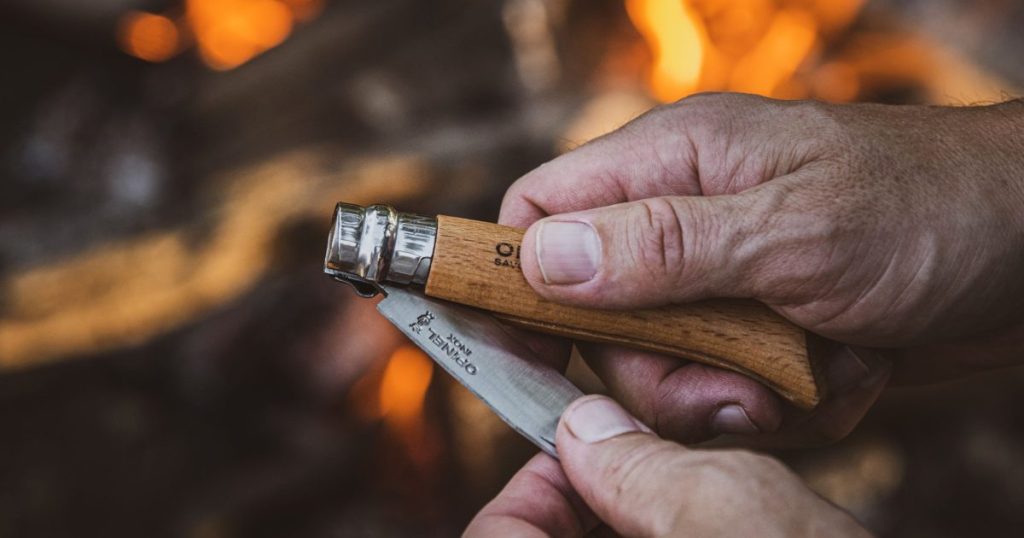
Featured image: Photo by Delfina Cocciardi via Pexels, used under the Pexels License. Specifications and availability should always be rechecked on the exact product page before purchase.